Showing posts with label writing. Show all posts

Friday, April 2, 2021

2021 Post #19 Written to Inspire Your Younger Self

 by Brett Vogelsinger

How many times in life do adults wish to go back and ask for a redo in their younger years?  How often do we wish we could time-travel and offer that younger version of ourselves some sage advice?  

This poem, "Seventeen" by Rudy Francisco imagines this possibility.  While the poem is about building up the courage to talk to someone you like and maybe even love, it is also about so much more.  It is about the social hierarchy of high school, male body image, introversion, and confidence, and Francisco's acrobatic skill with simile.  


After listening to this poem, ask your students to write a note, a letter, a poem, a list that they would give to a younger self.  In my school, grades 7-9, it is creatively fruitful to ask my ninth-graders to write to their seventh-grade selves.  Can you use a simile or two like Rudy Francisco does to bring to life what you felt back then or to add dimension to the wisdom you are able to pass on now as an older-but-wiser version of yourself?

I find that sometimes in workshops like this it is better to ask (or cajole) a few volunteers to share their work in class rather than insist everyone turn to a partner and read their writing out loud.  I let my students know this before they write so that they can feel comfortable expressing even thoughts and ideas they feel are deeply private.  The writer's notebook can be a space to write with such candor, but only if our students know how, when, and why they are expected to share, and what to do when they feel they cannot share. 

Depending on the number of volunteers to share with an audience, I might have a little time left for a deeper question raised by this poem:  How does our life experience shape our identity?  

Further Reading:

If you like this poem, check out another post featuring Francisco's "My Honest Poem" from earlier this year on Go Poems.  


Brett Vogelsinger is a ninth-grade English teacher at Holicong Middle School in Bucks County, PA.  He has been starting class with a poem each day for the past ten years. He is the creator of the Go Poems blog and the author of Poetry Pauses: Teaching With Poems to Elevate Writing in All Genres.   Find him on Twitter @theVogelman.


Sunday, March 21, 2021

2021 Post #7 -- A Contrafactual Hypothesis

 by Carol Jago

Contrafactual hypotheses have always fascinated me. In this poem Eve Ewing imagines that Emmett Till wasn’t murdered in Mississippi but lived, breathed, and shopped on the southside of Chicago. I love the details she depicts: Till’s porkpie hat, Roosevelt Road, and of course the candy bar. Among other things, the poem is an invitation to learn more about Till’s death and funeral, a landmark in the history of civil rights.

A person wearing a hat

Description automatically generated with medium confidence
Eve Ewing’s 1919 is both a poetry collection and a history lesson. Drawing from events in the “Red Summer” when racial tensions erupted into violence across the nation she presents poems, photographs, and primary documents in conversation that invite the reader to reflect upon current events.

You can provide a print copy of "I Saw Emmett Till This Week At the Grocery Store" and then listen as a class to Jonny Sun read the poem for the Poetry Foundation’s Ours Poetica project.

Invite students to:
  1. Read the poem identifying compelling details (“whistling softly,” “his hat, one of those fine porkpie numbers,” “Roosevelt Road,” “candy bar in hand”).
  2. Brainstorm people from history or from the news (a celebrity, a sports figure, a politician, etc.)
  3. Choose one of these people to learn more about.
  4. Do a quick online search for information about the individual, looking for compelling details.
  5. Write a poem modeled after Eve Ewing’s in which the individual is suddenly observed in a familiar contemporary place (at a bus stop, in the woods, on a Zoom call, walking down the street).
Further Reading: 


Carol Jago has taught middle and high school for 32 years and is past president of NCTE. She is associate director of the California Reading and Literature Project at UCLA and the author of The Book in Question: Why and How Reading Is in Crisis. (Heinemann 2019).

Wednesday, March 17, 2021

2021 Post #3 -- Small Kindnesses

by Elizabeth Jones

One thing I love about teaching middle and high school is the unique ability to watch my students forming their own world views, as they encounter the good, the bad, and the ugly of everyday life. These past few years, we’ve seen too little of the good: families pulled apart by political upset, gun violence and hate crimes on the rise, and the entire world devastated by an enemy virus. Now, more than ever, I worry about the world view our children are forming and what role we play in that.

Our weekly gratitude practice is an attempt to help students see the good in their lives. We watch short videos or read poetry that carries a positive message. Danusha Lameris's poem, "Small Kindnesses" is a perfect example. In the poem, Lameris speaks of the everyday nice things people do, usually without thinking - saying “bless you” and “thank you,’’ holding a door, or smiling at someone – good things.

Some lines are particularly effective in moving students to think. Lameris writes: Mostly, we don’t want to harm each other. “Is this true?” I ask.

Much more thought provoking, are the lines:

We have so little of each other now. So far
from tribe and fire. Only these brief moments of exchange.

"Tribe and fire" . . . These words conjure images of ancient people gathering for safety, warmth, and fellowship. The discussion that follows involves how we connect to others, how we still long for that sense of fellowship. Students then have three options for writing topics:
  • small kindnesses they’ve experienced that week - perhaps unnoticed,
  • connections in their own ‘tribes’ that provide safety and/or fellowship, or
  • goodness/kindness that exists in humans (mostly).

“Small Kindnesses” is a poem of encouragement that shines a light on human kindness.


Further Reading:


Elizabeth Jones is an English teacher in the Central Bucks School District in Doylestown, Pennsylvania.

Thursday, April 9, 2020

2020 Post #26 -- Engaging With Ekphrastic Poetry

by Andy Schoenborn

As the winter’s chill gives way to the warming months of Spring it becomes easier to see the world through fresh eyes. March and April are months filled with new beginnings as well as recollections that are worth celebrating with words. These are months beckoning us to take out our phones and capture pieces of them in photographs.

Today let’s ask students to take out their phones, peruse their camera rolls, or snap a picture of something beautiful. Using a photo of their choice let’s have fun with an Ekphrastic poem by responding to the image in verse.


Mini Lesson:

Briefly explore a simple photography technique called the Rule of Thirds. This technique asks users to make intentional choices with any subject to improve the composition and balance of an image. Ask students to notice how an image gains or loses appeal based on the choices a photographer makes.

With photography, and poetry, an artist’s composition is strengthened by the intentional choices made and the effect of those choices on a viewer. As a composer of images and words, a writer is in control and powerful pieces are crafted when the author reveals their unique (and sometimes unexpected) perspective. 


Process:

This writing strategy puts the “Go” in Go Poems as you invite students and yourself to explore the environment of the classroom, hallways, or outside. They have five-minutes to snap, browse, crop, and filter. Then write to the selected image for five minutes.


With the Rule of Thirds photography technique in mind, either crop an existing image or, if inspired, snap one of your own that causes you to either see the world with fresh eyes or recall surfacing memories.

  • You may apply filters, if you choose, or stay true by using no filter at all.
  • Once you have settled on an image, respond to it in verse.
  • When sharing, please include the image or link the image that inspired you.
  • You have five-minutes to find an image and five-minutes to write.

Go!


Sample poem:
“For Us” by Andy Schoenborn


Photo Febiyan on Unsplash by Click to Enlarge Image 


I have found you shaking,

bones rattling,

in the wind

and am reminded of my grandfather

whose wooden reach stretched further than

was comfortable.

Grounded in dark, hard earth

he pushed through life – lifting the soil.

Unearthing fragmented crust

the smaller parts defying gravity, clinging.

On erratic branches we grew from him.

Wild.

Disorderly.

(not) straight.

Until our reach sprouted new limbs.

Fragile saplings hardened too soon.

Themselves growing protective leaves

–like serrated lives –

unsure of the future.

Hard, brittle, and shaking in the wind

we were

lifted

by he who was daring

enough to push

through the hard,

impacted earth – for us.


Reflecting on the Strategy:

In the classroom, students are often asked to put phones away. While I ask students to do this as well, I recognize the way students interact with their devices, photography, and digital communities. When teachers encourage their students to use unexpected mediums, in this case their phones, students feel understood and validated.

This poetry writing strategy creates a win-win-win in the classroom. Students win because they are encouraged to use the tools in their pockets in productive ways. Teachers win because they will experience student engagement and the joy of writing to self-chosen ekphrastic prompts. And, poetry wins because words will be viewed through a new lens that encourages the sharing of personal perspective through poetry.


Further Reading:


Andy Schoenborn is an award-winning author and high school English teacher in Michigan at Mt. Pleasant Public Schools. He is a co-facilitator of the monthly #TeachWrite Twitter chat and first book, co-authored with Dr. Troy Hicks, Creating Confident Writers will be published on June 2, 2020. Follow him on Twitter @aschoenborn.

Monday, March 30, 2020

2020 Post #16 -- Star Dust

by Rama Janamanchi

This year on Valentine’s Day, NASA celebrated the anniversary of one of our most famous self-portraits and I found myself falling in love again with the Voyager photo of the ‘pale blue dot.’ I am reminded each time I see the image of the feeling of being awestruck. I felt similar awe when I held my children right after they were born. I was filled with wonder at the possibilities they embodied even as I was humbled by their fragility. Ada Limon’s poem, “Dead Stars,” reminds me forcefully that we need to create space in our routine for those moments of awe. It is too easy for us to forget the extraordinary panorama against which we lead our mundane lives. 


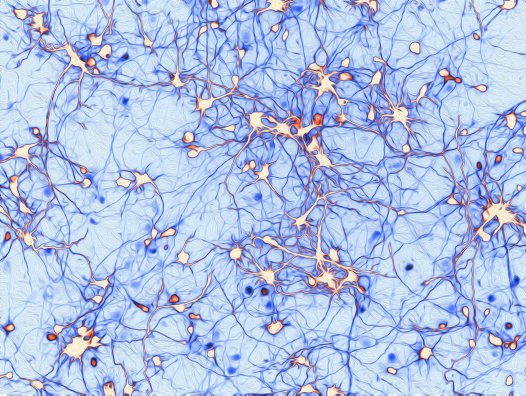
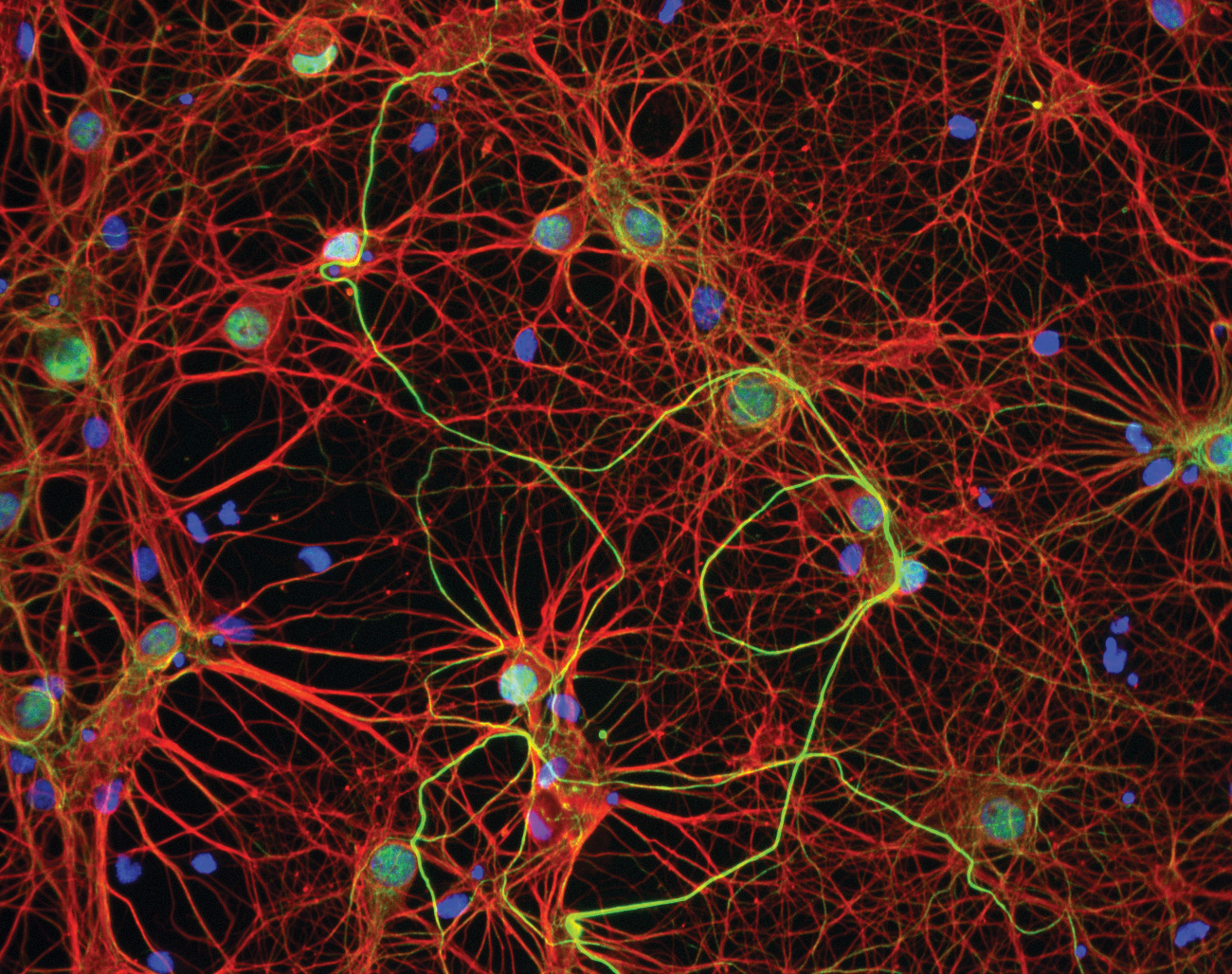
Before the kids come into the room, I place these images in different parts of the room. Two are from NASA’s Hubble Telescope and two are of neurons firing. 


We read Ada Limon’s poem - silently, then chorally. 


Students walk up to the images and write down a brief description of each image. Then they walk around again and this time they add emotions to their description. We talk about the similarities between images of the brain and the Hubble images. We list the similarities in how they look and how they make us feel. We talk about how the feeling of discovery when we recognize our connections to the stars. 


We read the poem again. Students read silently, then chorally. We highlight moments of discovery in the poem. We write down our own rediscoveries of the ordinary.

Further Reading:


Rama Janamanchi teaches at a private high school for students with language-based learning differences. Twitter: @MsJanamanchi410 


Thursday, March 26, 2020

2020 Post #12 -- In This Together

by Sylvia Vardell and Janet Wong

Teachers and administrators are doing heroic things on a daily basis to help families in their learning communities. Families are stepping up to comfort and educate children. But kids are still feeling a jumbled mix of emotions—joy over being able to sleep late, boredom due to social distancing, and anxiety over the uncertainties of the COVID-19 situation.

How can poetry provide relief?


By filling us with empathy.

By reminding us that there are helpers everywhere, people who can offer support.

By pointing to the good things, no matter how small.

By making us laugh.

And by doing all of the above, in most cases, in just a minute.

This is a perfect time to catch up on reading. But reading, in the traditional sense of placing eyes on words, can be very difficult right now. It’s just so hard to focus. Listening is slightly easier; this is one reason that many authors are offering read-alouds via social media. Author Kate Messner has gathered many author, illustrator, and poet read-alouds here. Also check out the resources of #OperationReadAloud on Facebook. And Audible is offering access to free audiobooks while schools are closed.


But fifteen minutes of quiet concentration, even if it’s passive listening, can still be hard. So here are some poems that take only 30 seconds each (on average), offered both as written text and also in video format. Some of the video offerings are “poem movies” featuring a montage of images; others are simply video readings. 

Step 1: listen to a few poems.
Step 2: if you like what you hear, read the text.
Step 3: if you really like the poem, use it as a writing prompt; put your own ideas down on paper.

Give it a try. If one of these poems brings you some hope, please spread the word. We are #inthistogether.

“Blue Bucket” by Naomi Shihab Nye (from HERE WE GO: A Poetry Friday Power Book by Sylvia Vardell and Janet Wong)

Poem Movie

Poem Text


“Look for the Helpers” by Michelle Heidenrich Barnes

Poem Movie


Video Reading (along with two other poems: “Bear” by Janet Wong and “Look for Birds” by Janet Wong)

Poem Text


Further Reading:


Sylvia Vardell is Professor in the School of Library and Information Studies at Texas Woman’s University; her current work focuses on poetry for children, including the nationally recognized blog, PoetryforChildren http://poetryforchildren.blogspot.com. Janet Wong janetwong.com is the author of more than thirty books for children and teens on a wide variety of subjects, including identity (A Suitcase of Seaweed & MORE). Together, Vardell and Wong are the forces behind the Poetry Friday books published by Pomelo Books. PomeloBooks.com

Wednesday, March 25, 2020

2020 Post #11 -- Poems Found in Feedback

by Sarah Gross

When I talk about poetry with my students it often elicits a groan.  We can usually get past the horror when we start reading contemporary poetry together and they realize, “Hey!  I can make sense of this!” because most of their experience with poems in the past is “old and boring” (in their words).  


But writing poetry?  That’s pretty terrifying for many of my students.  They either tell me outright that they can’t write poems or they sit in front of a blank document paralyzed by perfectionism.  How can they write a poem like the ones we’ve been reading?  Who will want to read their words?  It’s just too hard to write poems!


For that reason, I like to start with found poems.  Found poetry takes existing lines and reworks them for a new poem.  Students can make found poems from newspaper articles, other poems, novels, and any other text.  


My favorite found poem to share with students right now is “Dear Amy Nehzooukammyatootill” by Aimee Nezhukumatathil.  The poem takes lines from individual emails Nezhukumatathil received from high school students about her work and combines them into a new piece.  In an interview with superstition (review), a literary magazine, she says, 


“After receiving dozens of these emails, I noticed some repeated sentiments, almost chant-like, so to me, when reading all of these student emails together, I was very much drawn to the sounds first, content later. Of course I found the humor of dozens of high school students telling me quite openly and honestly what they thought of my first book and I was truly charmed and amazed at the lack of filter in their responses. The poem itself is just a tiny fragment of various responses that I received in a 24 hr period, but I think Annie Dillard talked about found poems best when she said, “…Turning a text into a poem doubles that poem’s context. The original meaning remains intact, but now it swings between two poles.”


Reading the poem and the interview immediately made me think of the feedback students receive all day long in school.  What would it look like if students followed Nezhukumatathil’s example and created a found poem from the feedback they receive?


For this activity, I ask students to read “Dear Amy Nehzooukammyatootill” as we listen to the recording on the Poetry Foundation website.  After we read it together we talk about what a found poem is. Students pull out their favorite lines from Nezhukumatathil’s poem and we discuss what the students might have meant when they included a particular line in the email versus what Nezhukumatathil means when she includes it in her poem.


Finally, I challenge students to create a quick found poem from the written feedback they have received from teachers.  We use Google Classroom for grading, so students can go back through their last few pieces and copy individual lines of feedback in different classes.  If they have hard copies of recent tests/assignments they can also pull lines from those.  


As a closing activity, ask students to share their poem with a neighbor (if they are comfortable).  

Further Reading:


Sarah Gross is one of the co-organizers of NerdCampNJ. She teaches in central New Jersey and loves spending time outdoors. Follow her on Twitter @thereadingzone

Sunday, March 22, 2020

2020 Post #8 -- If

by Amy Ludwig VanDerwater

Sometimes the most difficult part of writing is revising. Sometimes the most difficult part of writing is feeling brave enough to share one’s own words with another. And sometimes the most difficult part of writing is getting started.

Try beginning a poem draft with one word -- the word "if." For when these two letters combine in this order -- i and then f -- worlds shift and change. We can lead with an if tied to a wonder...or an if clinging to a hope. We can write about our lived lives or imagined worlds. We can write about history or about today or about a future near or far from now. We can write about serious subjects and about lighthearted subjects. An if poem can include one if or many.


If you and I had never met…

If my mother was a koala bear…

If he found a rock and if the rock could talk…

If forgiveness was easy...

If someday our grandchildren live on the moon…

If you helped build the pyramids…


Starting a draft with this wee word, we can then choose to write in the first person (I or we), the second person (you), or the third person (he/she/they). Each choice matters.

The first three stanzas of Truth - from my newest book, WRITE! WRITE! WRITE!, beautifully illustrated by Ryan O’Rourke - leads with "if."

From Write, Write, Write! by Amy Ludwig VanDerwater, 2020, linked below. 


In my poem Like Windowpanes, I use the word only once, to invite a reader in.


In his famous poem titled "If," Rudyard Kipling repeats this gem of a word again and again, each time layering its meaning with more love and possibility, as the kinetic typography video below demonstrates well:


Read the whole poem HERE

It can be lovely to be handed a beginning. “Start here,” a friend says. And somehow, with a trusted soul holding this literary door for us, we do.

Further Reading: 


Amy Ludwig VanDerwater is author of several books for children including FOREST HAS A SONG, EVERY DAY BIRDS, READ! READ! READ!, DREAMING OF YOU, WITH MY HANDS: POEMS ABOUT MAKING THINGS, and her most recent WRITE! WRITE! WRITE! She is also author of the professional book POEMS ARE TEACHERS: HOW STUDYING POETRY STRENGTHENS WRITING IN ALL GENRES. Amy lives in an old farmhouse in Western New York, and blogs poetry and lessons at www.poemfarm.amylv.com.


P. S.
A GIVEAWAY!
Boyds Mills & Kane will generously offer a copy of Write, Write, Write! to a commenter on this post. Be sure to include your Twitter handle or email address so that Brett can contact you. Winner announced 3/24/20 on Twitter. 

Thursday, March 19, 2020

2020 Post #5 -- Say My Name

by Brett Vogelsinger

The poem "Say My Name" by Idris Goodwin requires no real introduction, as the poem is so engaging, students will jump right in.  It is a poem about the many stories behind a name,  stories of both how that comes to be ours and what others try to do with it. I was pleased to find this on the #teachlivingpoets Black History Month list alongside many other phenomenal spoken word poems to build into our routine.


After sharing the video, I share a series of questions as my students open their Writer's Notebooks:

How did you get your name? Is there a story behind it you could tell poetically?
Do you know your "almost" name . . . the name your parents were thinking about but did not choose?
Do people mispronounce your name?  If so, how?
Are there common mispronunciations that you hear people use in everyday speech that bug you?
Are there any words you intentionally mispronounce?  Why do you make this choice?

We freewrite for about three minutes to one of these questions, then share in small groups whatever writers are willing to share from their work.  Several of my students gave me permission to share their drafts with Idris Goodwin via Twitter, and were thrilled to see him respond.

This whole activity only takes about ten minutes at the beginning of class, but it plants seeds that we can return to later for personal narrative writing or a more polished poem.  Moreover, students opened up an shared bits of their personal history after hearing Goodwin's poem; this activity built community among my writers.

A Related Post on Go Poems

Further Reading:


Brett Vogelsinger is a ninth grade English teacher and NBCT at Holicong Middle School in Doylestown, PA. He is the founding editor of Go Poems, facilitates his school's literary magazine, Sevenatenine, and contributes monthly posts at Moving Writers. Follow him on Twitter @theVogelman.

Tuesday, April 9, 2019

2019 Post #26 -- Reading a Poem on Multiple Levels


by John Waite

I enjoy sharing the poem "white dove—found outside Don Teriyaki’s" by Juan Felipe Herrara with my students. It is the fifth of five of Herrera's poems published here by The Boston Review.

While this poem is very readable in terms of language and the basic story line, it offers several challenges for readers that make it an ideal text for students. It can be taken literally, about a man keeping a bird in a cage, or it could be read as symbolic of a parent-child relationship, which could be of interest to students. The form is also interesting. With its lack of punctuation and irregular line breaks it offers a chance to talk about the specific poetic techniques of form.

As a class, we look at this poem with an eye on analysis, theme, and writing craft.


Analytical Questions

1. How does the lack of punctuation affect the way you read the poem? Why might the author choose to do this?

2. Why do you think the author chooses to specify the gender of the birds?

3. Why do you think the author chooses such irregular line breaks? Is there any sort of pattern to them that you can detect?


Thematic Questions

1. How would you characterize the author’s relationship with the white dove?

2. Is the white dove better off with the speaker or in the wild?

3. How might this relationship mirror that of a parent and child?


Writing Prompts

1. Is it better to be safe or free? Why?

2. Pretend you are the white dove. What would you say to the speaker of the poem?

Further Reading:


John Waite is a teacher at Downers Grove North High School in Downers Grove, Il. He is a licensed Reading Specialist and National Board Certified Teacher. He also creates Trojan Poetry, a web series in which he and a colleague (Mike Melie) attempt to discuss poems on a weekly basis. Find it on YouTube and Twitter. Reach John at jwaite@csd99.org.

Monday, April 1, 2019

2019 Post #18 -- Where Are You From?

by Chris Kehan 

Where are you from? What makes you who you are? George Ella Lyon’s poem "Where I’m From" helps us get to the heart of that question. You can pose these questions to your students prior to reading the poem or after. Model on chart paper your list. Have them jot in their Writer’s Notebooks the answers. For students who may need more support have them split the page into 4 quadrants and label each one: family, friends, hobbies/interests, childhood experiences.

Have your students listen to George Ella read the poem aloud herself from her website. It gives authenticity and voice to the poem for your students to hear. Talk about how she "shows" rather than "tells" about where she’s from. Have a discussion with your students about what they think about where she’s from based off the stanzas. Point out the use of repetition (I’m from) at the start of various lines. 
 
Model writing a stanza from your list. Then allow your students time to write their own Where I’m From poems using her framework. Have them partner up to see if they showed where they’re from rather than telling. (Example: Not, I’m from basketball - Rather, I’m from sneakers screeching on the shiny court.) 

Point out the metaphor ending she uses. Brainstorm other metaphors to which life can be compared (i.e. book, ocean, flower, etc.). Model writing one. Have students try writing different metaphorical endings in their Writer’s Notebooks.

This poem is great to use at any point in the school year as it gives you and your students an opportunity to get to know one another and work on the craft of showing and not telling to describe where they’re from.

Further Reading:


Chris Kehan is a Library Media Specialist in the Central Bucks School District and a proud fellow of PAWLP (PA Writing & Literature Project) whose passion is teaching reading and writing to all grade levels and ages. Follow her on Twitter @CBckehan


Sunday, March 31, 2019

2019 Post #17 -- Writing From a Lyric

by Brett Vogelsinger

I first used the song "A Long and Happy Life" by the band Delta Rae with my class to spark a Writer's Notebook piece about my students' roots.  "I was born to..." or "I was raised by... " make excellent starters for students to explore their heritage in words, perhaps even using quick images and figurative language as the songwriters do in the song.

Some of my students this year wrote lines like "I was raised by a strict Jewish mother and a free-spirited Catholic father" and "We were born to improve the world" and "I raised with brothers who tackled each other for fun" and "I was born to be everything my dad could not be." These lines are windows into my students' lives and afforded me views I might otherwise overlook.

This song is my Poem of the Day about a week prior to starting our personal narrative writing project, and it is the perfect way to start thinking about the stories that make my students the people they are today and the adults they are becoming. Try sharing this song or maybe one of your personal favorite. Find lines in the lyrics that empower new writing ideas for your students and help them to explore their roots.  In my classroom, we even begin to write as the song is playing.

I should also add here that Delta Rae often offers a free ticket giveaway for teachers on their summer tour, a drawing I won (thanks to some generous student nominations) for their Philly 2018 concert.  This band puts on one of the most phenomenal live music shows I've seen, and they have a genuine appreciation for the work of teachers.  I can't wait to see them in concert again in May! Much love to Delta Rae :)


Further Listening:


Brett Vogelsinger is a ninth-grade English teacher at Holicong Middle School in Bucks County, PA.  He has been starting class with a poem each day for the past six years and is the creator of the Go Poems blog to share poetry reading and writing ideas with teachers around the world. Find him on Twitter @theVogelman.

Thursday, March 28, 2019

2019 Post #14 -- Pantoun Poems

by Kevin English

One of my favorite poems to write with students is the pantoum. The basic structure is as follows: ABCD, BEDF, EGFH, ACHJ. We read Carolyn Kizer's poem Parent's Pantoun.

Here is one that I wrote in front of my students:


On Public Announcements


If it can be said in an email, send it.
Announcements seem to interrupt my day.
The beep is an intruder that I can’t stop,
Robbing my students of focus.


Announcements seem to interrupt my day.
My blood pressure rises; I can’t make it stop.
Robbing my students of focus,
Me of valuable instructional time.


My blood pressure rises; I can’t make it stop.
It’s followed by chaos and the opening door,
Robbing me of valuable instructional time.
It’s a daily battle that I’m losing.


It’s followed by chaos and the opening door.
The class is now interrupted
It’s a daily battle that I’m losing,
A war of attrition on my patience.


And the concentrating class is now interrupted.
The beep is an intruder that I can’t stop.
A war of attrition on my patience
If it can be said in an email, send it.


What I like about pantoums is that they appear accessible to students. I share that you really are writing 9 lines and then repeating those lines. But repeating those lines is also what is complex, where the author must think about getting the lines in an order that makes sense. I do always begin by having students number (or letter) the lines on a lined sheet of paper. It helps the writer organize their thoughts and lines, especially when it comes to repeating them later.

I ask writers to think about a few things as they write and revise:


What line is the most important to begin on and end on?

As you brainstorm and draft, which lines are worthy of being repeated and which are not?

How can you leverage punctuation in a way that will introduce an idea in one line but have the same line conclude an idea later on?


Further Reading:


Kevin English is an assistant principal, former ELA teacher, school board member, avid reader, and NWP teacher consultant.  You can follow him on Twitter @KevinMEnglish.